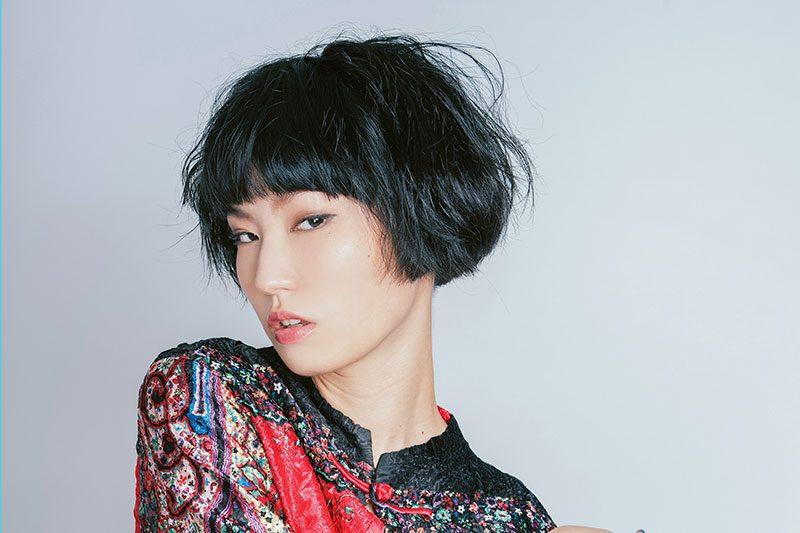
Most salons treat Asian hair the same as every other texture. The result is cuts that sit flat, color that turns brassy and thinning that leaves the ends looking choppy and unfinished. If that sounds familiar, you're not alone — it's the most common complaint I hear from new clients who find their way to my chair.
The reason is straightforward: the majority of cosmetology training programs teach techniques designed for medium-textured Caucasian hair. Those techniques are then applied to every client who walks in, regardless of hair type. For most textures, the results are adequate. For Asian hair, they're often visibly wrong.
What makes Asian hair different
Asian hair — whether Chinese, Japanese, Korean, Vietnamese, Filipino or Southeast Asian in origin — tends to share several structural properties that set it apart from other textures.
The strand itself typically has a round cross-section, which is why it grows straight rather than waving or curling. The cuticle layer is thicker and lies flatter, which gives Asian hair its characteristic shine but also makes it resistant to chemical processing. The density per square centimeter is often higher than other textures, which means there's simply more hair to manage. And the growth direction can vary significantly from one section of the head to another, which matters more than most stylists realize when building a shape.
These properties aren't defects — they're the reason Asian hair can look so striking when it's cut and colored well. But they do require a different set of techniques.
Why generic cutting techniques fail
The most common mistake is using thinning shears to reduce bulk. Thinning shears cut some strands short while leaving others long. On fine or wavy hair, the layers blend together and the effect is subtle. On thick, straight Asian hair, those short strands stick out or create visible steps. The result is ends that look chewed rather than polished.
The alternative is internal texturizing — using slide cutting and point cutting to remove weight from inside the section rather than from the ends. This preserves a clean perimeter while creating movement and reducing the heaviness that makes Asian hair difficult to style. It's a slower, more deliberate technique, and it requires an understanding of where the weight sits in each section.
For bobs and precision shapes, the sectioning matters as much as the cutting. Asian hair's varying growth directions mean that a bob cut with uniform sections will swing differently on each side of the head. A stylist who understands this will section based on growth direction and adjust the angle of each cut accordingly.
Why color on Asian hair is different
Color presents its own challenges. Asian hair's thick cuticle resists lightener at first — the product sits on the surface without penetrating. Then, once the cuticle opens, the hair can over-process quickly. Managing that transition is the difference between clean, dimensional color and the muddy, brassy result that so many Asian-hair clients have experienced.
Dark hair also has more underlying warm pigment than lighter hair. As you lift the color, those warm tones are exposed — red first, then orange, then yellow. On very dark Asian hair, this means that getting to a clean blonde requires careful, staged lightening with precise toning at each step. Rushing the process or using the wrong toner is how you end up with orange or brassy hair.
A stylist who understands this will lift gradually, tone strategically and use bond protection (like Olaplex) throughout the process. The result is dimensional color that looks intentional — not an accident that happened on the way to something else.
What to look for in a stylist
When evaluating a stylist for Asian hair, look for specific experience rather than general claims. Ask these questions:
Have you worked with Asian hair regularly, or just occasionally? There's a meaningful difference between a stylist who sees one Asian client a month and one who has spent years specializing in the texture.
Can I see examples of your work on Asian hair? Photos of cuts and color on hair that looks like yours will tell you more than any certification or review.
Do you use thinning shears or texturizing techniques? If the answer is thinning shears, that's a red flag for thick, straight hair.
How do you approach color on dark Asian hair? The answer should involve gradual lifting, toning and bond protection. If they talk about it the same way they'd discuss color on any other texture, they may not have the specialized experience you need.
My background with Asian hair
I've worked in three Asian-owned salons over the course of my career. I've won national and international competitions using Asian models — including the International New York Hair Show and multiple California Hair Show championships. I travel to Japan to instruct aspiring stylists in cut and color technique.
That's not a marketing pitch — it's the reason clients with Asian hair come to me from Torrance, Gardena, Palos Verdes and across the South Bay. The techniques I use were developed through decades of hands-on work with this specific texture, under competitive conditions where the results had to stand up to expert scrutiny.
If you've been frustrated by stylists who don't understand your hair, I'd welcome a conversation about what you're looking for. The consultation is complimentary and takes about ten minutes on the phone. Call (310) 386-8604 — I take every call myself.